
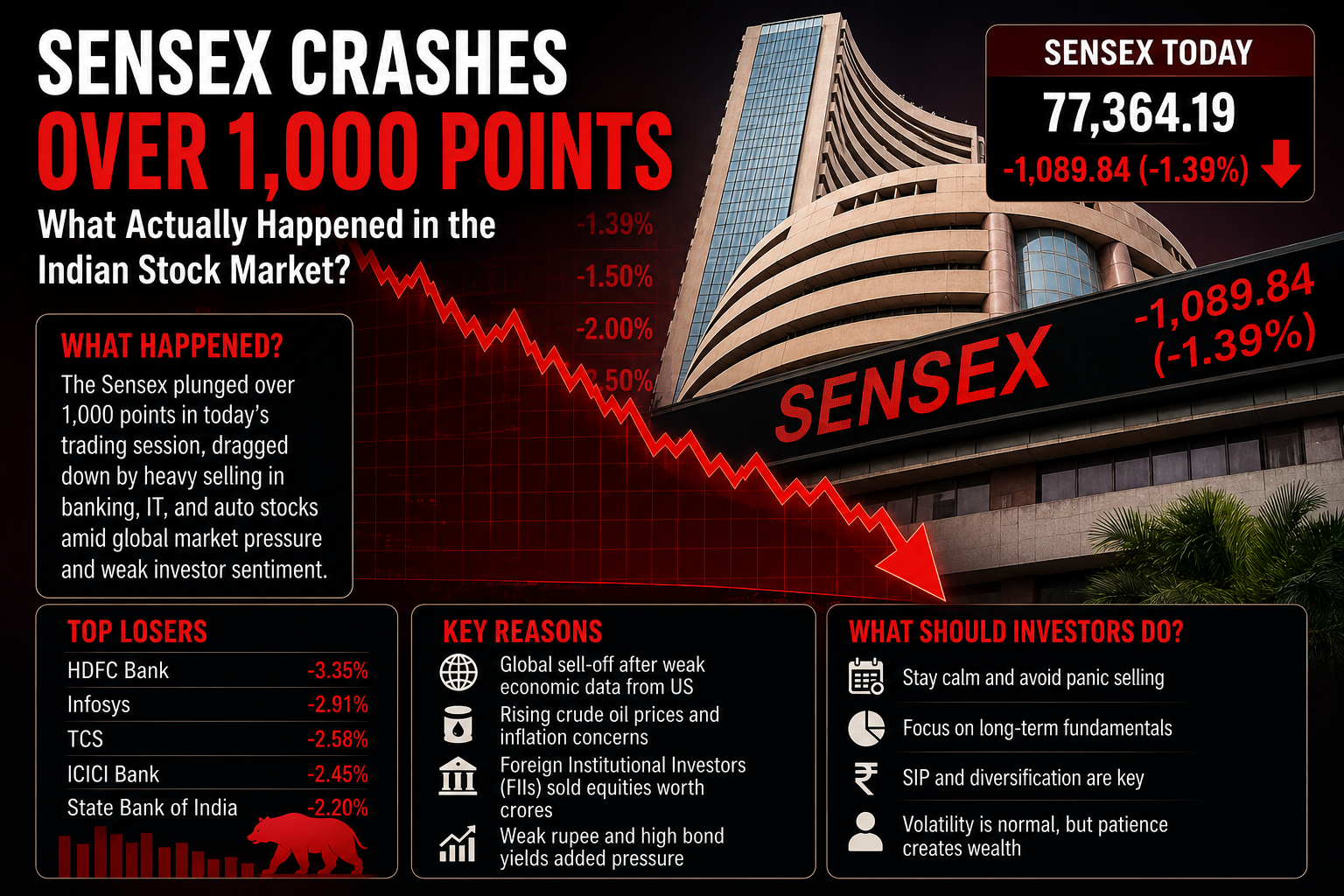
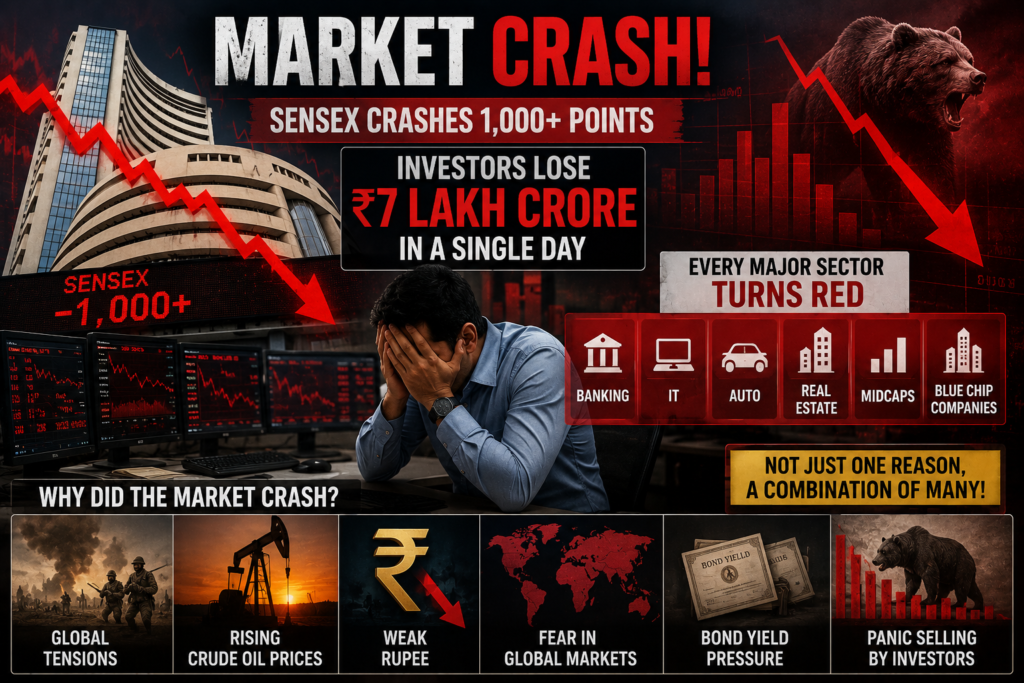
Mumbai: Indian stock markets faced a major selloff today as the Sensex crashed more than 1,000 points, wiping out nearly ₹7 lakh crore of investor wealth in a single session. The sharp fall triggered panic across Dalal Street, with heavy losses seen in banking, IT, real estate, and midcap stocks.
The market decline comes after several days of rising uncertainty in global financial markets. Analysts say the crash was driven by a combination of rising crude oil prices, weakness in the Indian rupee, global geopolitical tensions, and aggressive profit booking by investors.
What Was the Market Like Before the Crash?
Before today’s fall, Indian markets had been trading near strong levels for several weeks. Stocks linked to:
- power,
- infrastructure,
- defence,
- and Adani Group companies
had shown strong rallies recently.
Retail investors were actively buying market dips, while optimism around India’s long-term economic growth kept overall sentiment positive.
However, experts had already started warning about:
- expensive stock valuations,
- overbought conditions,
- weak global cues,
- and rising crude oil prices.
Foreign investors were also slowly reducing exposure to Indian equities over the past few sessions, indicating growing caution.
Today’s crash finally exposed the pressure that had been building underneath the market rally.
Biggest Reason: Crude Oil Prices Jumped Sharply
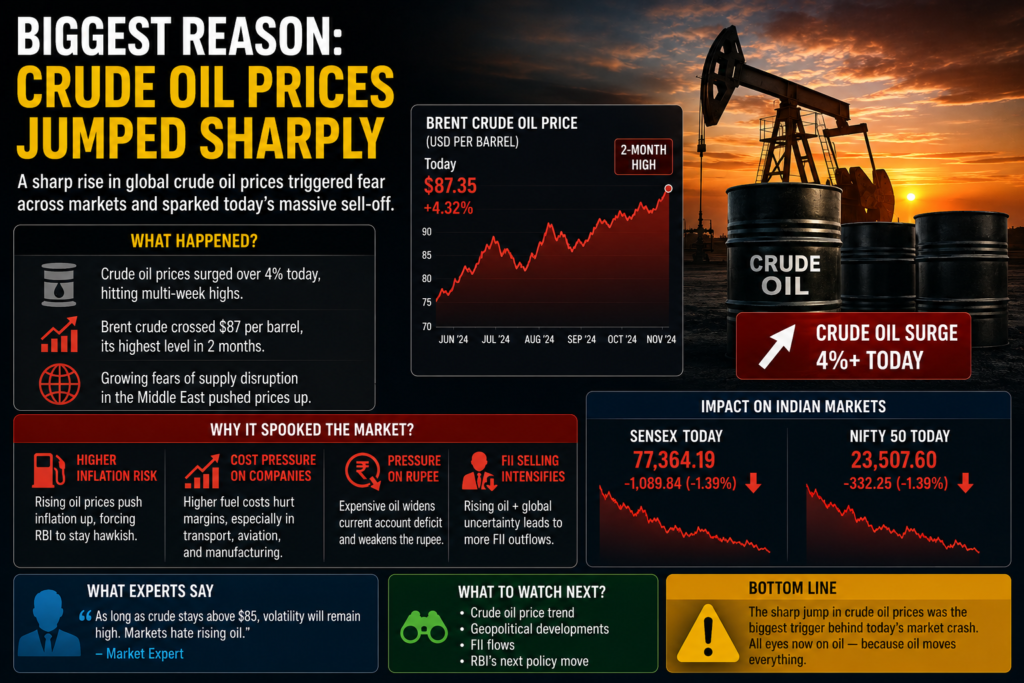
The biggest trigger behind the market fall was the sudden rise in global crude oil prices.
Brent crude surged above $105 per barrel after tensions in the Middle East increased sharply. Concerns around Iran and global energy supply disruptions created panic across global financial markets.
This is especially dangerous for India because the country imports most of its crude oil requirements from foreign markets.
When oil prices rise:
- fuel costs increase,
- transportation becomes expensive,
- inflation rises,
- and company profits come under pressure.
As soon as crude prices surged, investors began selling stocks aggressively fearing inflation and slower economic growth.
Rupee Hits Record Low
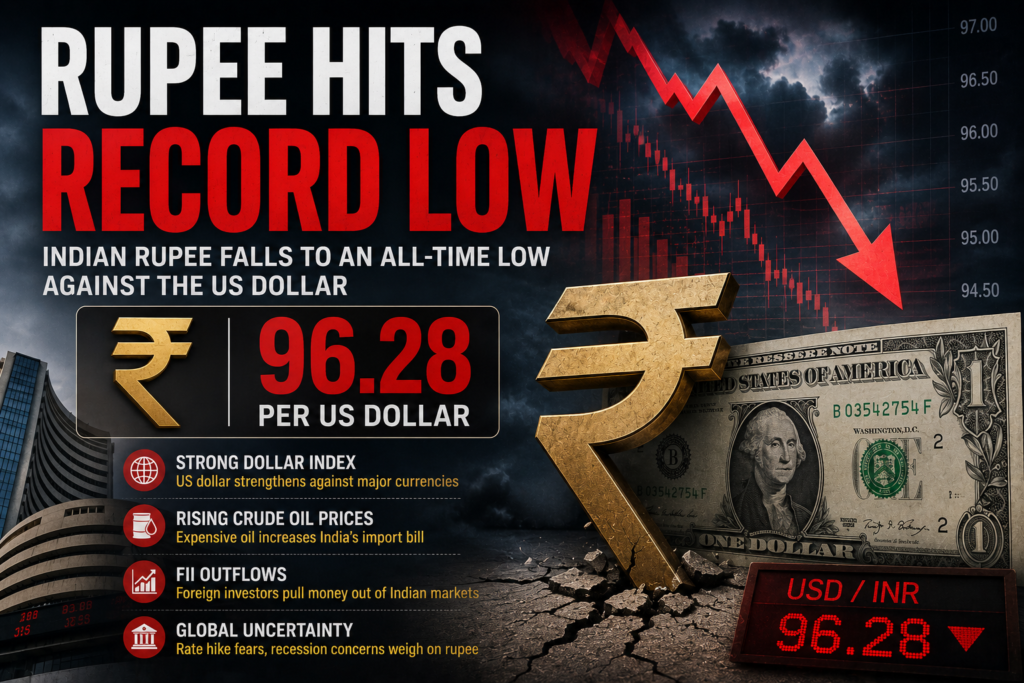
Another major concern came from the Indian rupee.
The rupee weakened sharply and touched fresh record lows against the US dollar, crossing around ₹96 per dollar levels.
A weak rupee creates multiple problems for India:
- imports become expensive,
- oil payments rise,
- inflation pressure increases,
- and foreign investors lose confidence.
Foreign Institutional Investors (FIIs) usually become cautious during periods of currency weakness because their returns reduce after conversion into dollars.
This led to additional selling pressure in the market.
Which Sectors Fell the Most?
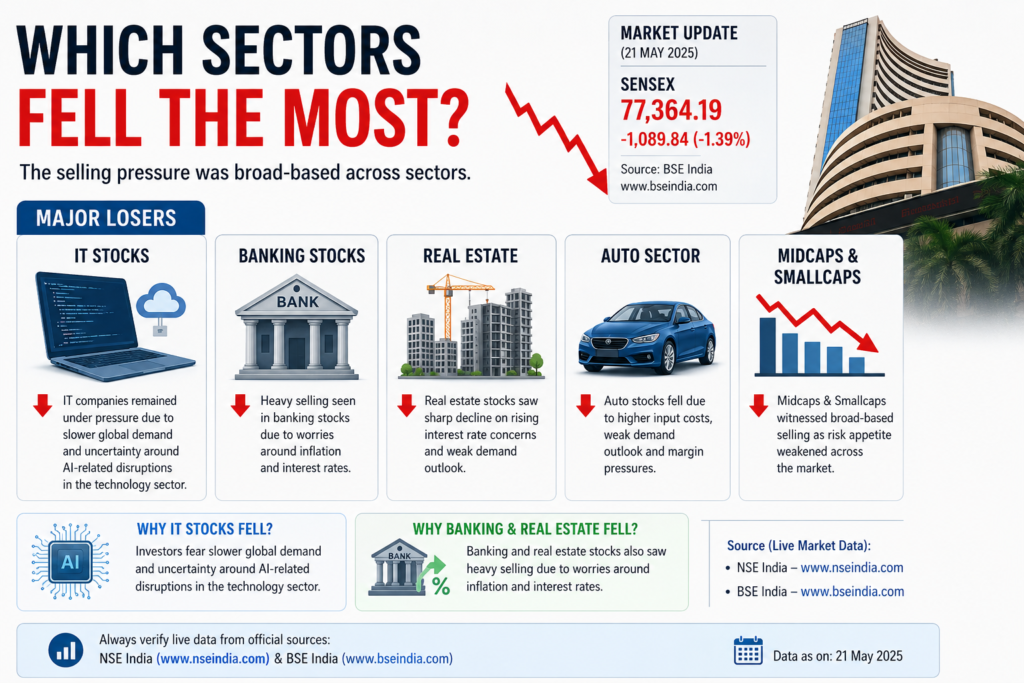
The selling pressure was broad-based across sectors.
Major Losers:
- IT Stocks
- Banking Stocks
- Real Estate
- Auto Sector
- Midcaps & Smallcaps
IT companies remained under pressure because investors fear slower global demand and uncertainty around AI-related disruptions in the technology sector.
Banking and real estate stocks also saw heavy selling due to worries around inflation and interest rates.
Can the Market Recover?

Historically, Indian markets have often recovered after geopolitical or oil-related corrections once global conditions stabilize.
Analysts believe recovery will now depend on:
- crude oil cooling down,
- rupee stabilization,
- reduction in global tensions,
- and return of foreign investor confidence.
If these factors improve, markets may bounce back strongly again.
But for now, experts are advising investors to:
- avoid panic selling,
- stay cautious with leveraged trades,
- and focus on fundamentally strong companies.
Final Take
Today’s market crash was caused by a combination of:
- rising oil prices,
- weak rupee,
- global tensions,
- and heavy panic selling.
The market had already become fragile after weeks of volatility, and today’s global triggers finally pushed investors into risk-off mode.
Still, analysts believe India’s long-term growth story in:
- infrastructure,
- power,
- manufacturing,
- and digital economy
remains strong.
For now though, Dalal Street has clearly entered a phase of high volatility — and investors should prepare for more turbulence in the near term.